
Choosing the wrong crane and rigging partner can mean lift failures, OSHA penalties, or equipment sitting idle while a project bleeds schedule. The right partner — matched to your load requirements, site conditions, and regulatory environment — is the difference between a clean job and an expensive one.
This list evaluates the ten most significant crane and rigging companies operating in the US today, ranked by fleet capacity, certifications, specialty capabilities, and sector depth.
Key Takeaways
- The ACT100 index measures combined fleet lifting capacity across the top 100 North American crane companies — totaling over 3.4 million US tons in 2026.
- Fleet capacity, OSHA/ASME compliance, NCCCO operator certification, and sector-specific experience are the core selection criteria when evaluating crane and rigging firms.
- The Gulf Coast is the highest-density heavy lift market in the US, driven by petrochemical, refinery, and energy infrastructure demand.
- Most top-tier companies offer integrated crane rental and rigging engineering — not just equipment.
- Pre- and post-lift equipment transport is a distinct logistical phase — one that requires a heavy-haul carrier experienced with oversize loads, not a general freight provider.
Overview of Crane & Rigging in the US
Crane and rigging companies own, operate, and engineer lifting systems to safely move heavy, oversized, or structurally sensitive loads on industrial and commercial project sites. Services span crane rental, contract lifts, rigging engineering, and lift plan development.
The scale is significant. The 2026 ACT100 report places the combined indexed capacity of the top 100 North American crane-owning companies at 3,411,131 US tons — each unit representing the maximum rated capacity of every mobile and crawler crane in a company's fleet. Key demand drivers fueling that growth include:
- Data center construction requiring precision heavy lifts
- Energy infrastructure buildout (wind, grid, and power generation)
- Manufacturing expansion and plant equipment installation
- All-terrain crane demand rising steadily across all three sectors
Fleet depth, certifications, and lift capacity vary significantly across this landscape. The profiles below rank companies on those factors — identifying which operators can realistically handle the heaviest, most complex lift work in the US.

Top 10 Crane & Rigging Companies in the US
Companies were selected based on ACT100 fleet capacity data, national or regional market presence, specialty lift capabilities, industry certifications, and breadth of client base — not company age or brand recognition alone.
1. Maxim Crane Works
Headquarters: Pittsburgh, PA | ACT100 2026 Rank: #1
Maxim Crane Works is the largest crane-owning company in North America by fleet capacity. It provides crane rental, rigging, and specialized lifting services across construction, industrial, and energy sectors from a network of 50+ US locations.
| Category | Details |
|---|---|
| ACT100 Index (2026) | 719,682 US tons |
| Fleet Size | 403 crawlers + 1,245 mobile = 1,648 cranes |
| Largest Crane | 2,535-ton Manitowoc 31000 crawler |
| Key Specializations | Crane rental, heavy industrial lifting, plant turnarounds, modular construction, infrastructure |
| Geographic Coverage | Nationwide — 50+ branches across all major industrial regions |
Maxim's scale is its core advantage. With the #2 crawler fleet and #2 mobile fleet in North America simultaneously, it can execute complex multi-crane lifts across multiple geographies without stretching capacity.
2. Bigge Crane & Rigging
Headquarters: San Leandro, CA | ACT100 2026 Rank: #2 overall, #1 by total fleet size
Bigge is one of the oldest and most established crane and rigging companies in the US, with over a century of operation. It holds #1 status by total fleet size in the 2026 ACT100 — 1,726 cranes (487 crawlers + 1,239 mobile units) — and specializes in complex rigging engineering for refinery and petrochemical environments.
| Category | Details |
|---|---|
| Fleet Size | 1,726 cranes (#1 by fleet size) |
| Largest Equipment | Liebherr LR 13000 (3,300-ton crawler) |
| Key Specializations | Rigging engineering, refinery and petrochemical lifts, heavy industrial, Gulf Coast projects |
| Geographic Coverage | 20+ US locations; strong West Coast and Gulf Coast presence (Houston TX, Baton Rouge LA) |
Bigge's refinery portfolio includes coke-drum replacements using Liebherr LR 13000 crawler cranes — the kind of technically demanding, high-consequence lifts that separate specialists from generalists.
3. ALL Erection & Crane Rental (ALL Family of Companies)
Headquarters: Valley View, OH
ALL Erection & Crane Rental is the flagship of the ALL Family of Companies — one of the largest privately held crane businesses in the US. Its standout credential: the largest mobile crane fleet in the ACT100 at 1,397 units.
| Category | Details |
|---|---|
| Mobile Fleet | 1,397 cranes — #1 mobile fleet in North America |
| Network | 29 branches under ALL, Central, Dawes, Jeffers, and ALT brands |
| Key Specializations | Crane rental, erection services, tower crane operations, construction and infrastructure |
| Geographic Coverage | Alabama, Florida, Georgia, Illinois, Indiana, Louisiana, North Carolina, Ohio, Pennsylvania, Tennessee, West Virginia, Wisconsin |

The family-of-companies model gives ALL both national scale and deep local expertise. Each regional brand carries market-specific knowledge alongside access to the full combined fleet.
4. Buckner HeavyLift
Headquarters: Graham, NC | ACT100 2026 Rank: #8 overall, #1 largest single crane
Buckner HeavyLift focuses exclusively on large and super-heavy lift projects — the segment where only a handful of companies in the world can compete. Its fleet includes Liebherr LR 13000 units rated at 3,300 US tons, earning the #1 ranking for largest single crane in the 2026 ACT100.
| Category | Details |
|---|---|
| Max Lift Capacity | 3,300 US tons (Liebherr LR 13000) |
| ACT100 Distinction | #1 largest single crane in North America |
| Key Specializations | Super-heavy lifts, stadium and aerospace projects, energy sector, industrial heavy lift |
| Geographic Coverage | Nationwide US project reach |
Buckner's Liebherr LR 13000 fleet positions it for the ultra-heavy lift category — stadium builds, reactor vessels, and aerospace structures where rated capacity and lift plan engineering are the deciding factors.
5. Barnhart Crane & Rigging
Headquarters: Memphis, TN | ACT100 2025 Rank: #4
Barnhart is a privately owned company that integrates crane services with in-house rigging engineering, heavy transport, and project management. Its 70+ North American locations and deep nuclear sector expertise set it apart from pure crane-rental operators.
| Category | Details |
|---|---|
| Crane Range | 8.5 to 1,760 tons |
| Network | 70+ North American locations |
| Key Specializations | Nuclear power, power generation, integrated heavy lift and transport, rigging engineering |
| Geographic Coverage | Nationwide — particularly strong in South, Midwest, and Southeast |
Documented nuclear work includes replacing 130,000-lb feedwater heaters at a South Carolina nuclear plant and transporting a 597,000-lb transformer to a Louisiana nuclear facility. That combination of in-house engineering, transport, and crane capability under one contract is what makes Barnhart a recurring partner for nuclear operators.
6. Lampson International
Headquarters: Kennewick, WA | ACT100 2026: #3 crawler fleet
Lampson International develops proprietary crane designs — including the Lampson Transi-Lift LTL-3000, rated at 3,000 US tons. With 389 crawler cranes (#3 North American crawler fleet), Lampson specializes in ultra-heavy single-lift operations.
| Category | Details |
|---|---|
| Max Lift Capacity | 3,000 US tons (LTL-3000 Transi-Lift) |
| Crawler Fleet | 389 cranes — #3 in North America |
| Key Specializations | Ultra-heavy specialty lifts, mining, industrial construction, proprietary crane technology |
| Geographic Coverage | Primarily Western US (WA, CO, TX, AZ); project reach across North America |
A notable example: Lampson deployed an LTL-1100 at the Kennecott Utah Mine to lift a 400-ton rebar cage — assembled and operational within 20 days on-site.
7. TNT Crane & Rigging
Headquarters: Houston, TX
TNT Crane & Rigging has built its reputation in the Gulf Coast's most demanding heavy lift market — petrochemical plant maintenance and refinery turnarounds. With 40+ branches and 750+ cranes, it operates one of the most geographically dense networks in the Southern US.
| Category | Details |
|---|---|
| Fleet Size | 750+ cranes (all-terrain, crawler, hydraulic truck, rough-terrain, carry-deck, tower) |
| Crawler Capacity Range | 80–750 tons |
| Key Specializations | Petrochemical maintenance, refinery turnarounds, Gulf Coast industrial projects |
| Geographic Coverage | Gulf Coast (Houston, Dallas, Austin) extending through GA, FL, AL, SC via Southway Crane |

TNT has grown through strategic acquisitions — Southway, RMS Cranes, Eagle West, Stampede, and JMS — building regional density that competitors struggle to match in the Southern industrial corridor.
8. Mammoet Americas
Headquarters (US): Rosharon, TX | ACT100 2026: Top 10
Mammoet Americas brings global-scale engineering to US projects. As the North American arm of the Netherlands-based Mammoet group, it specializes in the largest and most complex industrial lifts — including the PTC 200-DS ring crane, capable of lifts up to 5,000 metric tonnes.
| Category | Details |
|---|---|
| Max Lift Capacity | PTC 200-DS: up to 5,000 metric tonnes |
| Key Specializations | Engineered heavy lift, modular installation, LNG and energy mega-projects, SPMT transport |
| Geographic Coverage | Nationwide US — primary focus on Gulf Coast energy corridor |
A recent US Gulf Coast project used the PTC 200 to lift a 1,600-metric-tonne, 350-ft component. For LNG terminals, refinery expansions, and modular mega-projects where lift weight and transport coordination must be engineered together, Mammoet's integrated approach covers both under a single contract.
9. Morrow Equipment
Headquarters: Salem, OR | Tower Crane Specialty
Morrow Equipment is the leading tower crane company in North America — a distinct specialization from the mobile and crawler fleets that dominate this list. For high-rise construction and urban infrastructure where mobile cranes simply cannot operate, Morrow is the specialist of record.
| Category | Details |
|---|---|
| Fleet Benchmark | 560+ tower cranes (2022 figure; expanded since) |
| Recent Investment | 27 new Liebherr tower cranes ordered in a $35M fleet expansion |
| Key Specializations | Tower crane rental and erection, high-rise construction, campus and infrastructure projects |
| Geographic Coverage | Nationwide US and Canada |
Morrow's ordered fleet includes Liebherr models rated up to 20 tonnes (22 US tons) tip capacity — purpose-built for vertical construction environments that mobile crane operators cannot serve.
10. Deep South Crane & Rigging
Headquarters: Baton Rouge, LA
Deep South Crane & Rigging is a Gulf Coast heavy lift specialist with a proprietary ultra-heavy lift capability — the VersaCrane, rated up to 3,000 tons. It serves petrochemical, refinery, power generation, and industrial construction clients primarily in Louisiana and surrounding Southern states.
| Category | Details |
|---|---|
| Max Lift Capacity | 3,000 tons (VersaCrane system) |
| Crane Range | 2.5–3,000 tons |
| Key Specializations | Ultra-heavy lifts, Gulf Coast petrochemical and refinery projects, industrial construction |
| Geographic Coverage | Primarily Gulf Coast and Southern US (Baton Rouge HQ) |
Documented projects include approximately 200 lifts at a Michigan power plant and major vessel and module lifts at Louisiana petrochemical facilities — a project record that demonstrates the VersaCrane's reliability across both long-term plant work and single high-consequence lift events.
How We Chose the Best Crane & Rigging Companies
Evaluation criteria were based on publicly available ACT100 fleet capacity data, specialty lift capabilities, geographic coverage, and industry certifications — not company age or marketing presence.
The Five Selection Factors Buyers Should Use
- Fleet capacity and crane type — Does the company's available equipment actually match your load weight, geometry, and site constraints? Don't assume a large fleet means the right crane is available for your project.
- OSHA and ASME compliance — Look for documented adherence to OSHA 29 CFR 1926 Subpart CC (construction crane operations) and ASME B30 standards for equipment and rigging hardware.
- NCCCO operator certification — OSHA does not mandate NCCCO by name, but NCCCO-certified operators represent a credible, accredited standard. Verify that operators are both certified and employer-evaluated per 1926.1427.
- Sector-specific experience — Nuclear, petrochemical, and wind energy carry fundamentally different risk profiles. A company with 500 cranes but no nuclear track record is not the right partner for a reactor cavity lift.
- Geographic proximity and mobilization cost — Crane mobilization is expensive. A company with a regional branch near your project site will consistently outperform a national operator mobilizing equipment across the country.

The Mistake Most Buyers Make
Selecting based on brand recognition or lowest day rate — without verifying fleet availability, certifications, and regional capacity — is the single most common procurement error in crane and rigging. Get an itemized quote that includes mobilization, rigging engineering, operator fees, and permit coordination before comparing prices.
Don't Overlook the Transport Chain
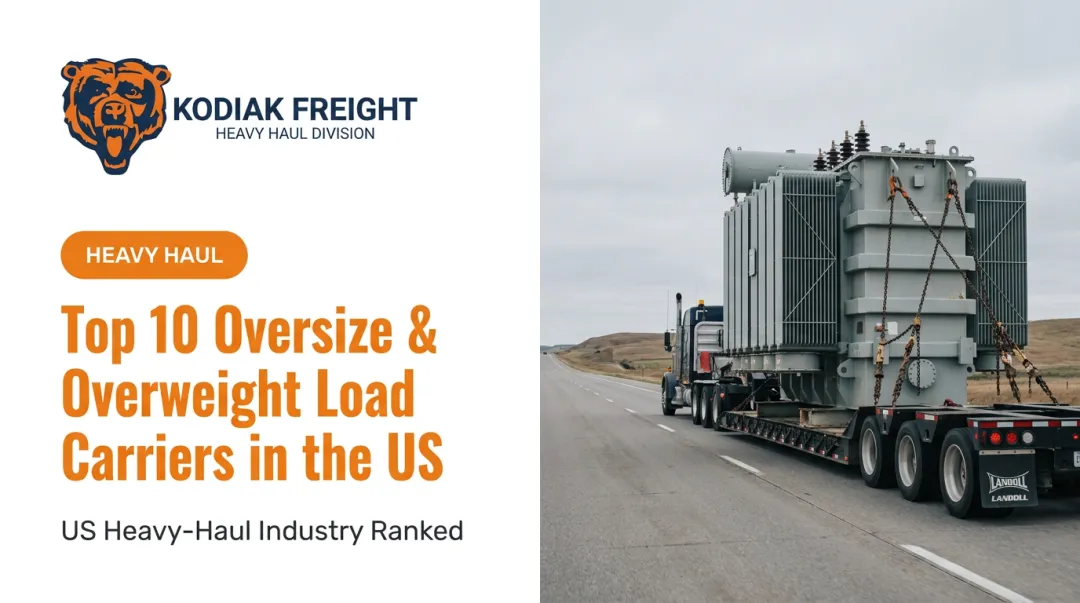
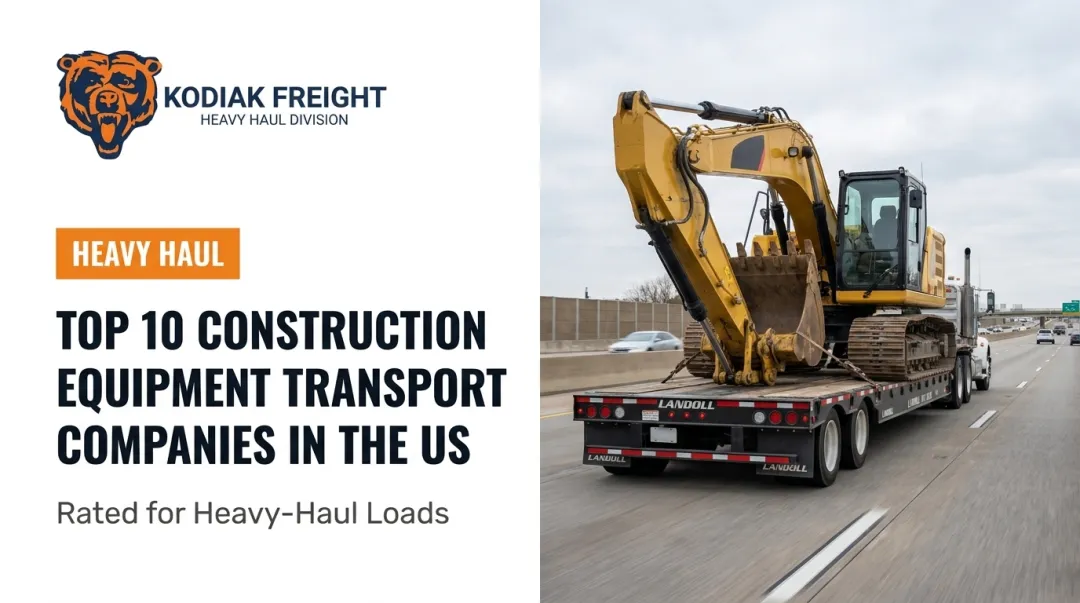
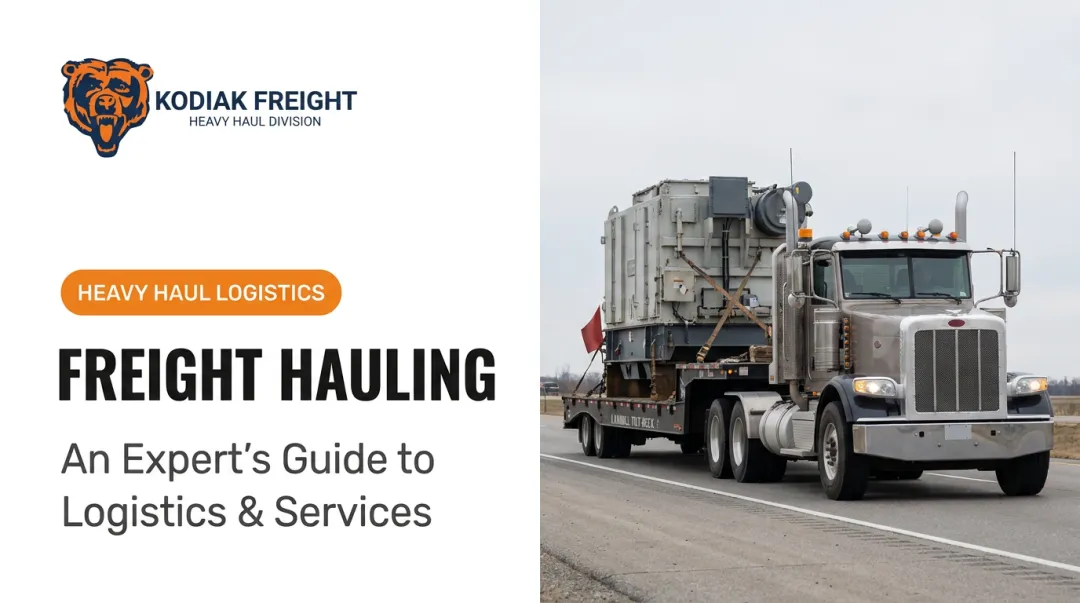
A frequently overlooked factor: getting oversize equipment to and from the lift site is its own logistical challenge. Mining machinery, industrial modules, and large manufacturing equipment require specialized heavy-haul transport — not standard freight carriers.
This is where transport planning connects directly to your crane selection process. Companies like Kodiak Freight specialize in exactly this gap: oversize and overweight shipments for manufacturing, mining, oil and gas, and industrial construction clients. Their Heavy Haul Division covers permit coordination, Landoll tilt-deck transport, and crane and rigging for on-site load placement — handling the full move, not just the lift.
Conclusion
The right crane and rigging partner is determined by project requirements — not company size. Load weight and geometry, site conditions, regulatory environment, and timeline all dictate which company belongs on your shortlist. A 700,000-ton fleet index means little if the right crane isn't available in your region on your schedule.
When evaluating candidates, go beyond fleet size:
- Review their OSHA compliance and incident history
- Verify operator NCCCO certification and employer evaluation records
- Confirm sector-specific experience relevant to your project type
- Request itemized quotes covering mobilization, rigging engineering, permits, and operator fees
And remember: the lift is only one phase. For industries like manufacturing, mining, and oil and gas, moving oversize equipment to the site — and back out again — is its own logistical operation. Kodiak Freight's Heavy Haul Division handles this phase: Landoll tilt-deck transport, permit and escort coordination, laydown yard staging, and crane and rigging for load placement across large-scale industrial projects.
If your next project involves oversize or overweight freight, contact Kodiak Freight at ops@kodiakfreight.com or 913-210-5144 to discuss your heavy-haul requirements.
Frequently Asked Questions
What is the 3-3-3 rule for cranes?
The "3-3-3 rule" appears in some informal training materials as a pre-lift check framework covering pre-operation, operation, and post-operation phases. It is not defined in OSHA, ASME B30, or NCCCO standards, so verify any version against your governing regulatory standard before applying it.
What is the difference between a crane company and a rigging company?
Crane companies own and operate lifting equipment; rigging companies engineer and execute the connection between a crane and its load — including slings, shackles, spreader bars, and lift plans. Most major companies on this list provide both services as an integrated offering, which is generally preferable for complex lifts.
What certifications should a crane and rigging company have?
Key credentials include OSHA 29 CFR 1926 Subpart CC compliance, ASME B30 standards adherence, and NCCCO certification for crane operators. Nuclear facility work adds another layer: ASME NOG-1 governs overhead and gantry cranes at nuclear sites, a significantly more stringent standard than general mobile crane requirements.
How is the largest crane company in the US determined?
The ACT100 index, published by American Cranes & Transport, ranks crane-owning companies by combined fleet lifting capacity in US tons — the sum of maximum rated capacities across every mobile and crawler crane in a company's fleet. Maxim Crane Works has held the #1 position, with a 2026 index of 719,682 US tons.
What industries use crane and rigging companies the most in the US?
Primary demand sectors are petrochemical and refinery, power generation (nuclear and wind), heavy industrial construction, infrastructure, offshore, and manufacturing. The Gulf Coast region — particularly Texas and Louisiana — represents one of the highest concentrations of heavy lift demand in the country.
How much does it cost to hire a crane and rigging company?
Costs vary widely. Bigge estimates $300–$1,500 per hour depending on crane class, but large crawler crane projects can reach hundreds of thousands of dollars once mobilization, assembly, rigging engineering, permits, and operator labor are factored in. Always request an itemized quote, since day rate alone is rarely a meaningful comparison point.