
Crane Rigging
Crane-supported rigging for loading, unloading, and placing oversized equipment when forklifts or standard handling methods are not suitable for the job-site requirements.
Services
Aug 3, 2026
Kodiak Freight provides Industrial Riggers Services for companies moving, loading, unloading, and positioning oversized machinery or specialty freight. From crane-supported placement to heavy-haul coordination, permits, escorts, and staging, our detail-focused team helps agriculture, manufacturing, mining, railroad, and other large-scale industries move complex equipment safely, efficiently, and with personalized support from planning through delivery.
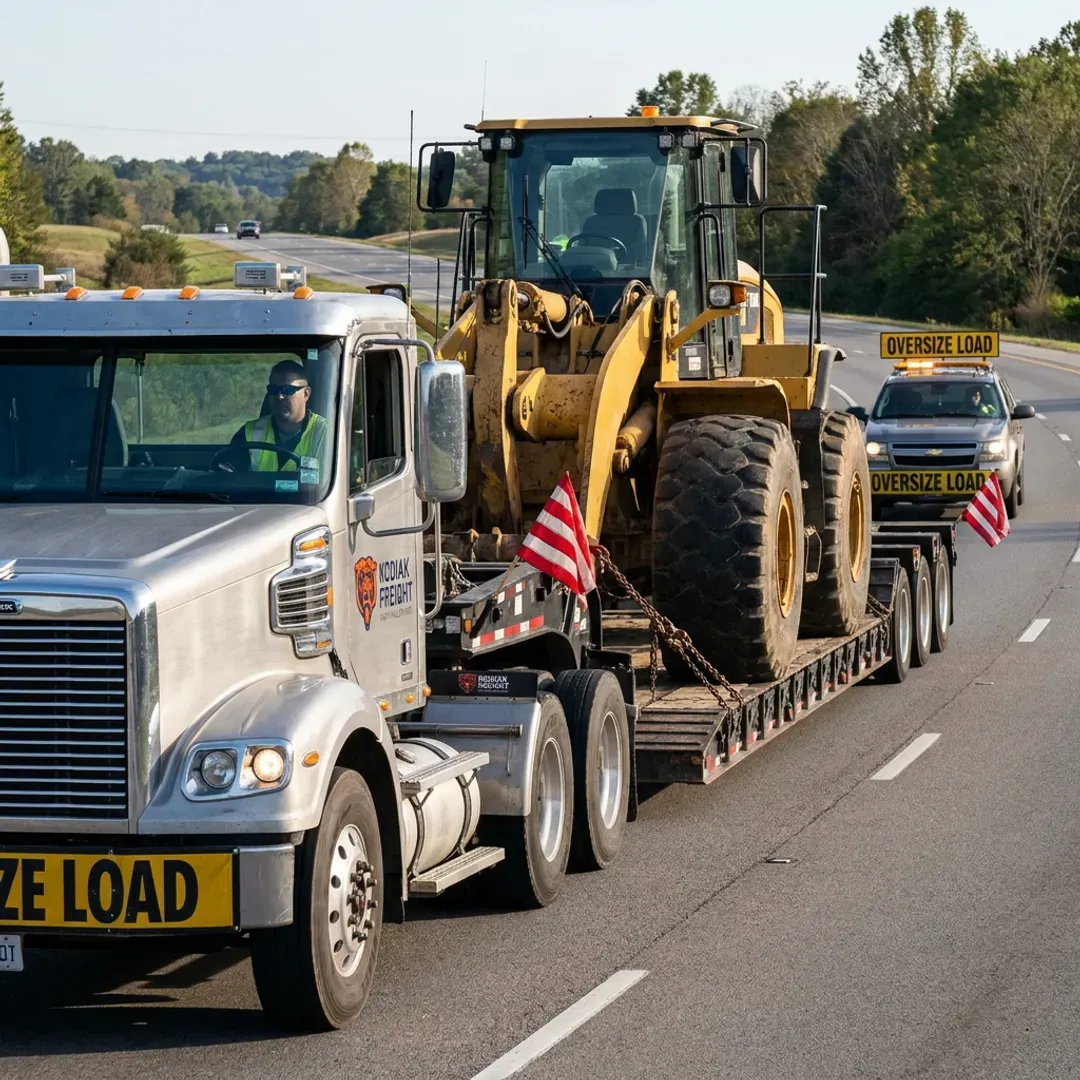
Complete rigging support for heavy equipment loading, placement, permitting, staging, and compliant specialty freight transport.
Crane-supported rigging for loading, unloading, and placing oversized equipment when forklifts or standard handling methods are not suitable for the job-site requirements.
Transport coordination for freight exceeding standard DOT dimensions or weight thresholds, including specialized trailers, route planning, securement, and compliance support.
State-by-state oversize and overweight permit coordination with pilot car and escort support for legal, safer movement of dimensional freight.
Hydraulic tilt-deck trailer transport for equipment that can be loaded without separate crane support, streamlining certain heavy machinery moves.
Heavy equipment staging, organization, and project logistics support for oversized materials awaiting transport, installation, or onward delivery.
Industrial machinery hauling for plant build-outs, factory relocations, production line installations, and equipment upgrades across manufacturing operations.
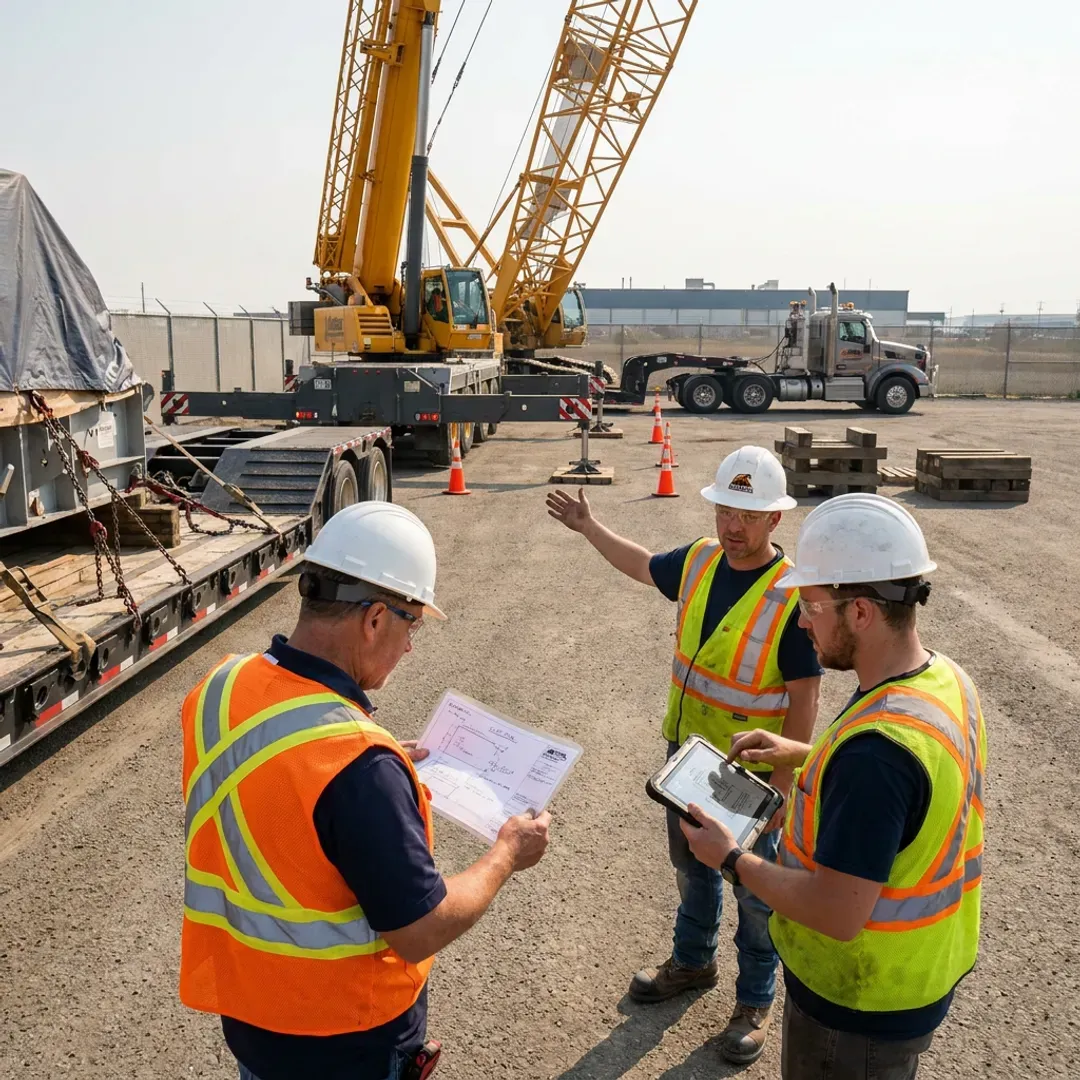
We begin by reviewing equipment dimensions, weight, lift points, access conditions, origin and destination requirements, and any placement constraints. This helps identify the right rigging approach, trailer type, permit needs, and support resources before the move begins.
Our team coordinates the rigging, loading, route, permit, escort, and staging details needed for a legal and efficient move. For oversize or overweight freight, this planning stage helps reduce delays and avoid preventable job-site complications.
The equipment is prepared for lifting, loading, or transfer using appropriate securement, blocking, and handling methods. When needed, crane support, Landoll trailers, or specialized heavy-haul configurations are coordinated to match the load.
Kodiak Freight supports the compliant movement of the shipment, including coordination around permits, escorts, route restrictions, and timing. The goal is to protect the equipment while keeping the project aligned with delivery expectations.
At delivery, the rigging plan supports safe unloading, staging, or equipment placement based on the destination requirements. Our detail-oriented approach helps large-scale industries complete critical equipment moves with confidence.
Kodiak Freight brings precision, safety, and personal attention to complex industrial moves.
Focused support for oversize, overweight, and specialty freight requiring careful planning.
Each shipment receives tailored coordination instead of one-size-fits-all freight handling.
Safety and timing guide every detail from loading through final delivery.
Forward-thinking logistics tools help improve visibility, planning, and service value.
An industrial rigger is a trained professional who prepares, secures, lifts, moves, and positions heavy machinery or oversized equipment. Riggers use cranes, specialty trailers, lifting hardware, blocking, cribbing, and load-control methods to handle equipment that standard forklifts or dock loading cannot safely manage. In heavy-haul logistics, rigging also supports loading, unloading, placement, and job-site coordination.
Riggers typically need practical training in load weight calculation, center-of-gravity assessment, signaling, lifting hardware inspection, crane safety, and OSHA-aligned job-site practices. Many employers prefer documented rigging or signalperson training, equipment-specific experience, and familiarity with heavy machinery handling. For transport-related work, teams may also coordinate with CDL drivers, permit specialists, and escort providers.
Industrial rigging is commonly needed when equipment is too heavy, oversized, awkwardly shaped, or sensitive for standard loading methods. This includes manufacturing machinery, mining equipment, agricultural machines, data center components, railroad equipment, and production-line assets. Rigging is especially valuable when a load must be lifted, placed precisely, transferred to a specialized trailer, or unloaded at a constrained job site.
A rigging plan usually considers equipment weight, dimensions, lift points, center of gravity, site access, ground conditions, trailer type, crane requirements, permits, escorts, and destination placement needs. Kodiak Freight focuses on the small details that affect safety and timing, helping coordinate rigging support with heavy-haul transport, staging, and compliance requirements for complex freight.
Yes. Kodiak Freight’s related services include oversize and overweight load hauling, permit coordination, escort support, Landoll transportation, and heavy-haul shipping. Pairing rigging with transport helps ensure the equipment is not only lifted and loaded correctly, but also routed, permitted, secured, and delivered according to the needs of the shipment and job site.
Safety starts with understanding the load, choosing suitable lifting and securement methods, confirming access conditions, and coordinating qualified equipment support. Industrial rigging may involve cranes, hydraulic trailers, blocking, tie-downs, and escort planning. Kodiak Freight emphasizes safe and timely delivery, personalized coordination, and careful attention to details that reduce risk during loading, movement, and placement.
Pricing is based on the complexity of the lift or placement, equipment size and weight, origin and destination conditions, trailer requirements, permit and escort needs, staging requirements, and project timeline. A straightforward loadout may be simpler than a multi-stage machinery relocation. Providing accurate dimensions, photos, and site details helps create a more efficient quote.
Kodiak Freight supports specialty freight needs across the United States, with headquarters in Flower Mound, Texas. Service availability depends on equipment type, route requirements, permit conditions, and the rigging or transport resources needed for the job. The team can review your shipment details and determine the best approach for loading, movement, staging, and delivery.
Send your shipment details and get practical guidance.
Coordinated rigging and heavy-haul support for complex equipment moves across national project routes.
United States
Service Area
Heavy-Haul
Specialty
913-210-5144
Support
Tell us where your equipment needs to move.